Creative projects stay creative when the process fixes the things that should be fixed, such as the problem, the audience and the decision points, and leaves room where exploration is useful. The most reliable tools are a phased structure, a small number of review gates with named approvers and a written way to handle change.
Fix the problem before the solution
The Design Council’s Double Diamond is a widely used model of the design process. It has four phases:
- Discover: understand the problem by speaking with the people it affects.
- Define: frame the challenge using what you learned.
- Develop: generate different possible answers.
- Deliver: test solutions at small scale, reject what will not work and improve what will.
The model separates widening out from narrowing down, and the Design Council notes that findings can send a team back to earlier stages. That matters for planning: a schedule should expect some looping rather than treat every revision as failure. Much creative frustration comes from jumping into Develop before Define is agreed, for example producing frames before anyone has settled who the audience is.
Agree what “done” means for each phase
Each phase needs an output that someone can approve or reject.
| Phase | Typical output | Question the gate answers |
|---|---|---|
| Brief | One-page brief: audience, goal, constraints, success measure | Are we solving the right problem? |
| Concept | Two or three directions, a mood board or script outline | Which direction do we pursue? |
| Design or build | Storyboard, layouts or rough cut | Does it do the job? |
| Finish | Final assets and checks | Is it ready to release? |
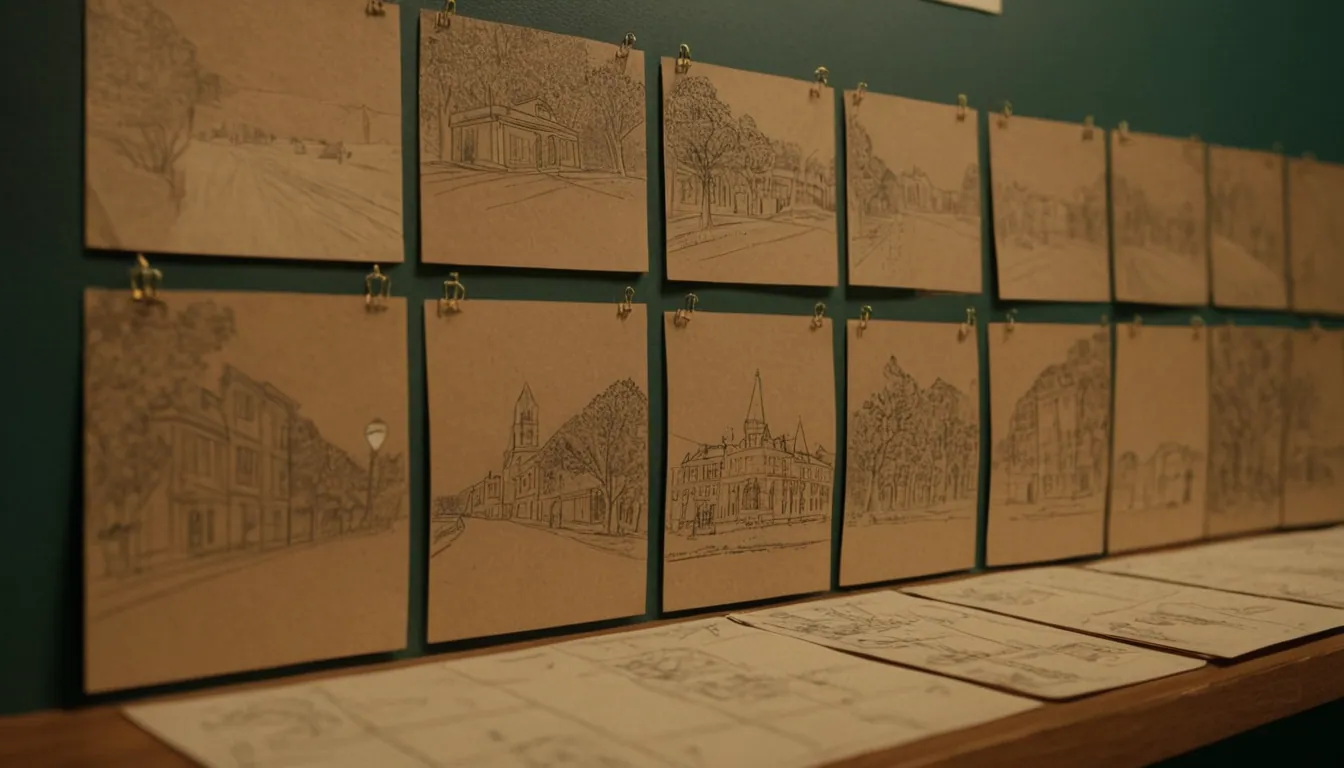
A storyboard is a good example of a cheap artefact that lets people react before costly production starts. A single strong idea also reduces scope: it gives every later decision something to be tested against.
Use review gates sparingly
A gate is a point where a named person decides to proceed, adjust or stop. Keep them few and tied to phase outputs. Some practical rules:
- Name one approver per gate. Feedback can come from many people, but approval comes from one, or the project becomes a negotiation.
- Send the brief with the work. Reviewers should judge against agreed goals, not personal taste.
- Ask for specific feedback. “Does this meet the audience need in the brief?” produces better answers than “What do you think?”
- Limit rounds. Agree a number of revision rounds up front, and what counts as a round.
- Record decisions. A short log of what was approved and why stops decisions being reopened.
Gates can slow work if they become ceremony, so keep them proportionate to risk. A small social video does not need the same controls as a national campaign.
Work in short cycles where you can
The Agile Manifesto principles were written for software, but several travel well: deliver working output frequently, welcome changing requirements, prefer face-to-face conversation, treat simplicity (maximising the work not done) as essential and reflect regularly on how to improve. For creative work, that means showing rough work early, discussing it live and ending each project with a short retrospective.
Handle change on purpose
Change is normal and often helpful. The risk is unmanaged change. When a request arrives after a gate:
- state what it affects: scope, timing, budget or quality
- decide whether it replaces something or adds to the work
- record the decision and who made it
This protects both the client and the team. If you are weighing production methods, the time and cost trade-offs differ between approaches, as discussed in AI commercial production vs traditional filming.
What to protect from process
Process should not remove exploration time. Reserve space at the concept stage for divergent work, keep early reviews informal and avoid requiring polished presentation of unfinished ideas. Ask for rough work and treat it as rough.
Limits
No framework fits every project. Models such as the Double Diamond describe a way of thinking, not a fixed schedule, and gates that are too rigid can fail in fast-changing situations. Adapt the structure to team size, budget and risk, and review it after each project.
Where Radiance Impact fits
Radiance Impact combines creative production, digital technology and marketing, so projects often cross disciplines and benefit from a clear structure. To discuss a project, contact us or read about Radiance Impact.
Sources
- The Double Diamond, Design Council
- Framework for Innovation, Design Council
- Principles behind the Agile Manifesto, Agile Manifesto authors