A tight explainer script does three things: it hooks the viewer in the opening seconds, gives every beat exactly one idea, and fits the spoken words to the running time. Write for the ear rather than the page, cut anything the picture already shows, and read the draft aloud before anyone records or animates a frame.
Start with the one sentence
Before drafting, finish this sentence: “After watching, the viewer will understand [one thing] and will [one action].” If you need two sentences, you probably need two videos. This is the same discipline as a good creative brief: decide the audience, the single message and the call to action first.
Structure the script in beats
A beat is a single idea paired with a single visual. A simple shape for a short explainer:
| Beat | Job | Typical content |
|---|---|---|
| Hook | Earn the next few seconds | A problem, a claim you can support, or a direct question |
| Problem | Show you understand the viewer | One concrete situation they recognise |
| Idea | Introduce the solution or concept | The single idea, in plain words |
| Proof or how | Make it believable | One step-by-step or one honest example |
| Action | Say what to do next | One clear call to action |
For ad-length structures, see story structure for a 30-second commercial.
The hook
Viewers decide quickly whether to stay. YouTube’s own audience retention guidance defines intro retention as the share of viewers still watching after the first 30 seconds, and says a low figure suggests the opening did not match what the title and thumbnail promised. The lesson for scripting is to deliver on the promise of the title immediately rather than spending the opening on a greeting or a logo.
Avoid openings that delay the point: company history, “welcome to”, or a long definition. Start with the situation the viewer cares about.
Write for how people take in information
People scan more than they read, and the same impatience applies to listening. Nielsen Norman Group’s research on how users read on the web found that most test users scanned new pages, and that concise, scannable, objective copy measured much better than promotional copy. Spoken scripts benefit from the same rules: lead with the conclusion, keep one idea per paragraph, and drop boastful phrasing.
Practical rules for the ear:
- Short sentences. If you run out of breath, it is too long.
- Concrete nouns and active verbs.
- Say numbers simply and use few of them.
- Avoid words that are hard to say or sound alike.
- Repeat the key term rather than inventing synonyms.
Budget your words
Speaking pace varies by speaker, language and style, so there is no universal figure. Measure your own: record a voice reading a sample paragraph, time it, and work out words per second. Then multiply by the planned running time and leave space for pauses and visual moments with no narration. Build the budget from your own reading test rather than a rule of thumb from the internet.
A useful habit is to write a version about 15 per cent shorter than the budget. Editing in the sound and visuals always takes longer than expected.
Let the picture carry weight
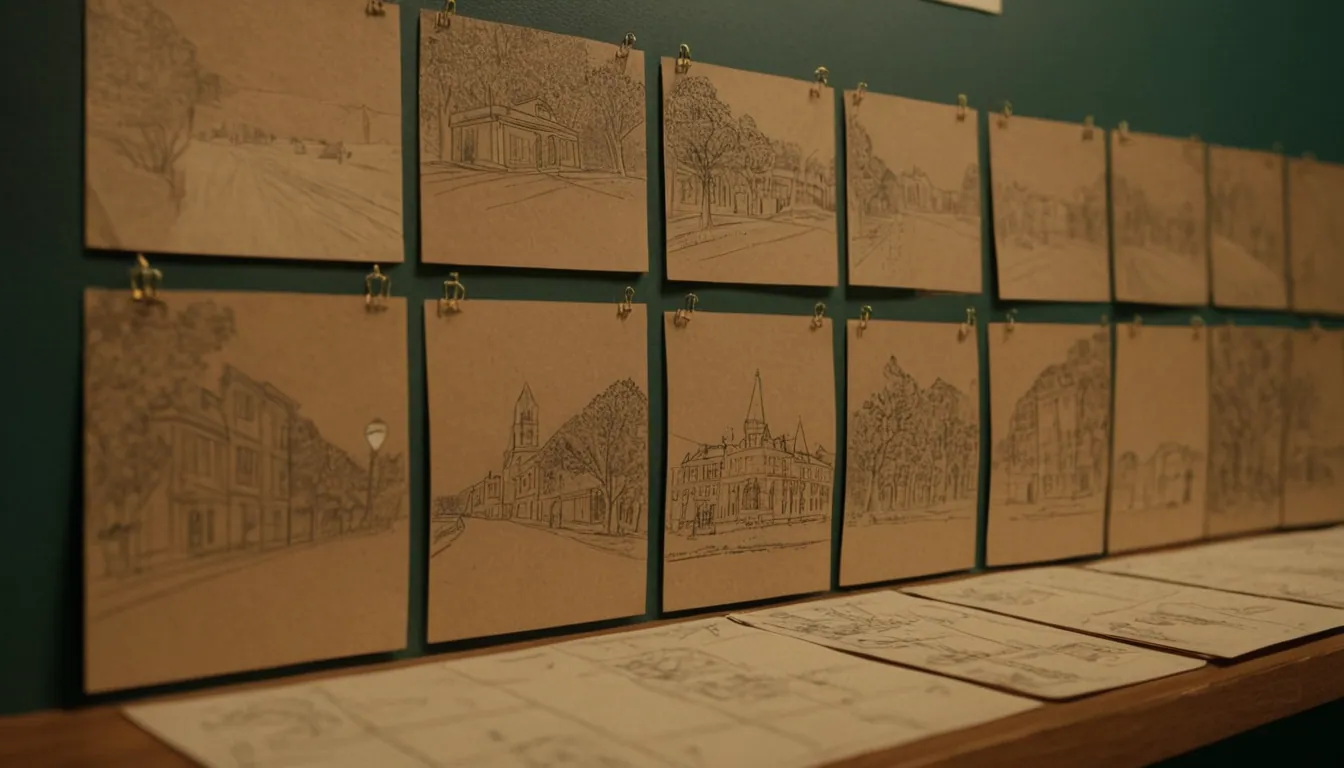
Do not narrate what the viewer can see. If the screen shows a product opening, the script can say why it matters. Use a two-column draft, picture on the left and words on the right, so each beat has both. This is the bridge to a storyboard.
Read-aloud test
- Read the script out loud at a natural pace and time it.
- Mark every place you stumble, breathe or change a word. Fix those lines.
- Ask someone unfamiliar with the topic to listen, with no visuals, and say back the main idea.
- Cut the line that nobody would miss.
- Read again and re-time.
Mistakes to avoid
- Cramming three ideas into one beat.
- Opening with the brand rather than the viewer’s problem.
- Writing paragraphs that read well but sound stiff.
- Claims you cannot support. Under Australian Consumer Law, advertising must not be misleading, so keep claims you can substantiate. This is general information, not legal advice.
- Forgetting captions. Write lines short enough to caption cleanly; see captions and subtitles for accessibility.
Where Radiance Impact fits
Radiance Impact’s Studio produces short-form and social video, animation, and voice and sound work. If you have a draft script or only an idea, contact us to talk it through, or see the Studio page.
Sources
- Audience retention, YouTube Help
- How Users Read on the Web, Nielsen Norman Group