A 30-second commercial has room for one idea told in five beats: a hook, a situation, the product moment, a proof or payoff, and a clear ending with a call to action. Thirty seconds is long enough to show a small story arc and short enough that every shot must earn its place. The timings below are a planning guide, not a rule, and the most important one is the opening.
Why 30 seconds is different
A 15-second ad is a single moment, as covered in how to create a cinematic 15-second ad. Thirty seconds can hold a beginning, a turn and an ending. That extra space is a trap as well as an opportunity: it tempts teams to include two messages. Decide on one before you write a single shot, as in how to write a creative brief.
The five-beat structure
| Beat | Approx. time | Job |
|---|---|---|
| 1. Hook | 0 to 5 seconds | Earn the next ten seconds |
| 2. Situation | 5 to 12 seconds | Set up a person, a need or a tension |
| 3. Product moment | 12 to 20 seconds | Show the product or service changing the situation |
| 4. Payoff and proof | 20 to 26 seconds | Show the result, or a specific reason to believe |
| 5. Close | 26 to 30 seconds | Brand, one line, one action |
Beat 1: The hook
The opening decides whether the rest is seen. Google’s creative guidance for YouTube is organised around four principles abbreviated ABCD: Attention (hook the viewer), Branding (brand early, often and richly), Connection (help people think or feel something) and Direction (ask them to take action) (Think with Google). Those map neatly onto the beats here.
Hooks that work are specific: an unexpected image, a question the viewer would ask, a person mid-action. Avoid slow logo reveals and establishing shots with no tension. Where an ad may be skippable, treat the first five seconds as a complete mini-ad.
Beat 2: The situation
Show a recognisable person or moment. A hypothetical example: a tradesperson loads a ute at dawn and the paperwork is still on the passenger seat. The viewer should feel “that is me” or “I know someone like that” within a few seconds. Keep the cast small and the setting clear.
Beat 3: The product moment
This is the turn. The product should do something visible, not sit in a shot. Show the action: it opens, it is used, it changes what happens next. If the product cannot be shown in use, show the experience it creates.
Beat 4: Payoff and proof
Show the result and, if you claim something factual, give one reason to believe it. Claims in advertising must be accurate and provable in Australia, check the claim against Australian Consumer Law, and avoid measurements and superlatives you cannot substantiate. A small, real detail is stronger than a big vague promise.
Beat 5: The close
The end card needs the brand, one line and one action. Google’s guidance associates showing the brand in the first five seconds with higher conversions on average, and adding a human voice and on-screen text with further gains in its Demand Gen skippable in-stream context (figures dated July 2026 for the US) (Google Ads Help). Treat those as Google’s own aggregate figures, and test them against your own results. It also advises removing non-functional buttons, arrows or clickable overlays from images because they compete with the platform’s own calls to action.
Branding inside the story
Do not leave the brand for the last frame. Let brand colours, props, wardrobe and set carry identity through the film, as Google’s production guidance suggests. Brand early, but tie it to the product or setting rather than floating a logo over the picture.
Sound plan
Plan the audio alongside the picture. Google’s production guidance advises constructing the video with audio in mind, since most YouTube videos are watched with sound. A voice-over or on-screen talent can carry the story, and music should support, not drown, the key line. Add captions for viewers without sound, and for accessibility.
Common mistakes
- Two messages in one film.
- A hook that is about the brand, not the viewer.
- Product shown but never used.
- A call to action that asks for three things.
- Dialogue that only makes sense with sound on.
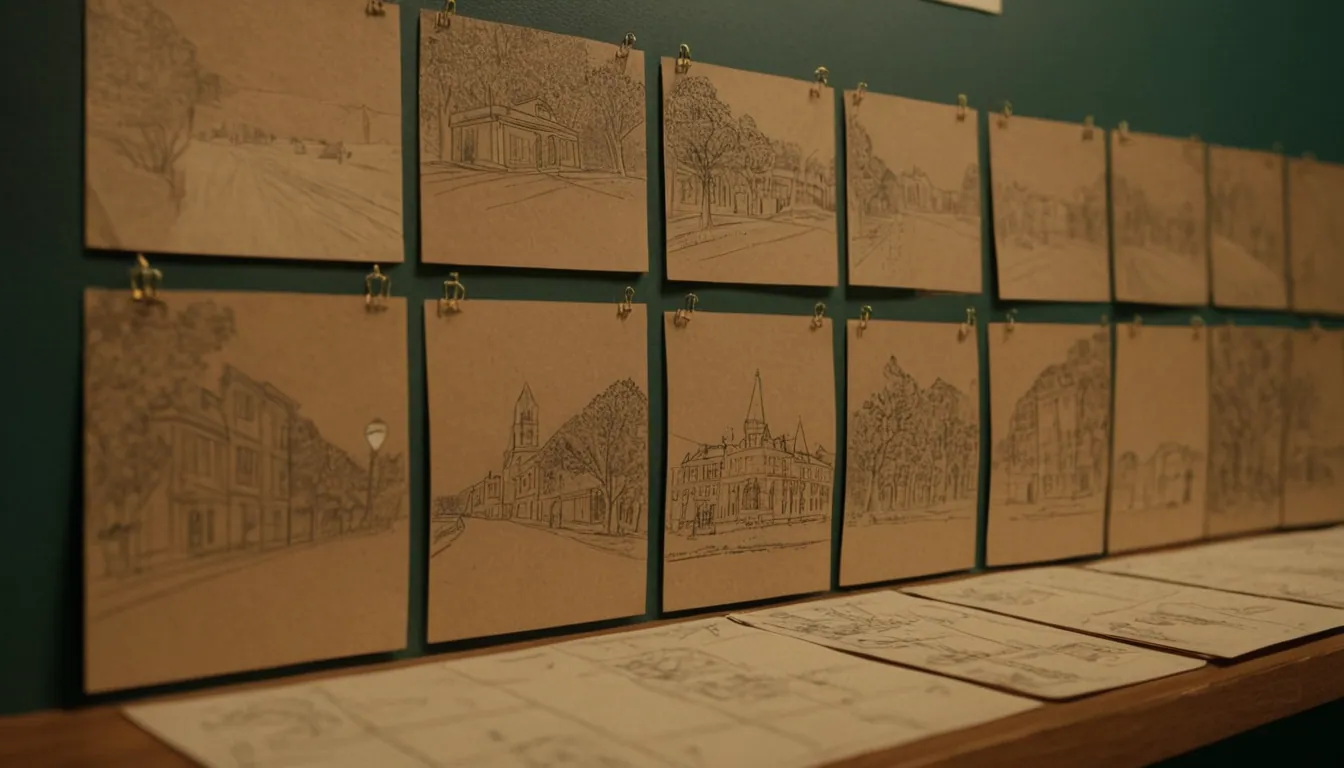
- Script written first, shots imagined later. Storyboard before production, see how to storyboard a commercial.
Writing the shot list
- Write the single message in one sentence.
- Write one line per beat.
- Add two to four shots per beat, keeping the total modest, since cuts that are too quick are hard to follow.
- Mark where the product, brand and voice first appear.
- Test the first five seconds on its own, then the whole film on mute.
- Prepare cut-down versions (15 seconds, and a vertical edit) from the same shoot or generation plan.
If you are making the film with AI tools, specify the beats in your brief, see AI video brief template, and plan for consistency across shots.
Where Radiance Impact fits
Radiance Impact’s Studio produces AI commercials and product films, brand films and short-form video, including script, storyboard and post-production. To plan a 30-second spot, see /studio or send an enquiry through /contact.
Sources
- Production guide for YouTube ads, Think with Google
- Creative guidance on YouTube, Google Ads Help