Campaign concepts are rarely a flash of inspiration. Most teams get there through a repeatable sequence: define the problem, find an audience insight, generate many routes, narrow them against the brief, and test the survivors cheaply. This article covers that development process. Choosing one idea and extending it across channels is a separate topic, covered in building a campaign around one creative idea.
Step 1: Start with a problem, not a format
A concept answers a business problem. “We need a video” is a format request. “Brisbane homeowners do not know we install solar batteries” is a problem. Write the problem as one sentence, then add the audience, the single thing you want them to think or do, and the constraints (budget, timing, channels, legal limits).
Without that sentence, every later decision becomes a matter of taste.
Step 2: Find the insight
An insight is a true observation about the audience that explains their behaviour and creates tension your brand can resolve. It is not a statistic and not a product feature.
Useful sources include customer conversations, support questions, search queries, reviews and sales calls. Hypothetically, a cafe might learn that customers treat its quiet Tuesday mornings as the only unhurried hour of their week. That observation is richer than “we serve good coffee”.
Test each candidate insight with three questions:
- Is it true for a meaningful group, not just the team?
- Does it explain behaviour rather than describe it?
- Does it point towards something the brand can credibly say?
Step 3: Turn the insight into a proposition
The proposition is the single-minded message that the work will carry. Keep it short enough to say aloud. If you need “and” twice, you have several messages, and a campaign that tries to say several things usually says none clearly.
Step 4: Generate routes, then pick the big idea
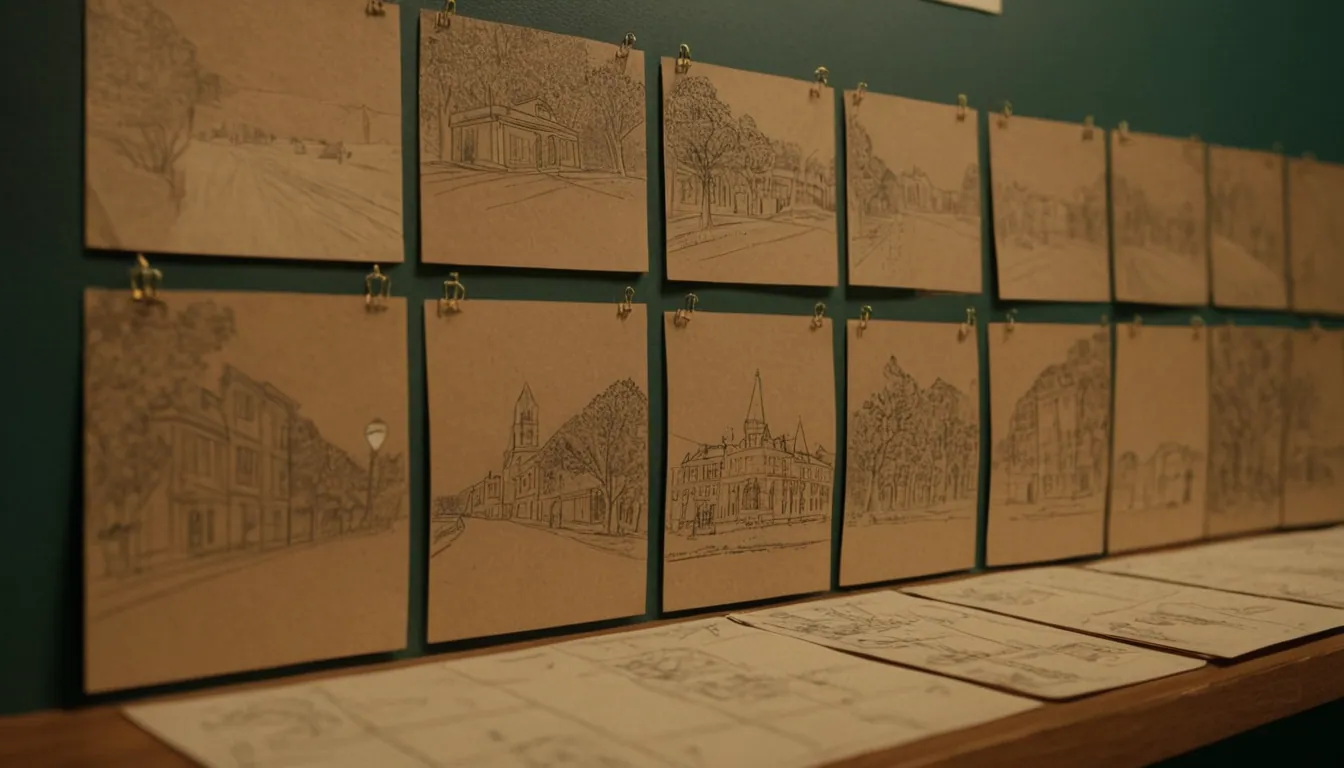
Teams typically develop several distinct creative routes rather than variations of one. Each route is a one-line idea plus a sketch of how it would look and sound. Mix approaches: a humorous route, an emotional route, a demonstration route.
Google’s Think with Google features System1’s Orlando Wood describing the goal as finding “a big, encompassing idea, an organising principle that people will grasp easily” that quickly taps into a basic human motivation. The same piece discusses recurring characters or scenarios, which it calls fluent devices, as a way to stay consistent over time while keeping each execution fresh (Think with Google). Treat these as one practitioner’s argument, not a universal rule.
A simple scoring grid
Score each route from 1 to 5 against the criteria below. The numbers are only a way to force a conversation.
| Criterion | What to ask |
|---|---|
| Relevance | Does it answer the problem and the insight? |
| Distinctiveness | Would it look like a competitor’s work if the logo were removed? |
| Stretch | Can it run as a 6-second cut and a longer film? |
| Fit | Is it credible for this brand and legal for this category? |
| Feasibility | Can it be produced within budget and time? |
Step 5: Test before you build
Testing a concept is far cheaper than testing a finished film. Options, in rising order of cost:
- Internal read-through: can someone not on the project explain the idea back in one sentence?
- Storyboard or animatic: see how to storyboard a commercial for the process. AI-generated frames can serve as rough boards.
- Audience conversations: show the route to a handful of target customers and listen for what they remember.
- Small paid trial: run rough cuts to small audiences and compare responses.
Google’s research with Ekimetrics offers a useful lens for refining the execution once an idea is chosen. It analysed 778 YouTube videos against 73 creative attributes from the ABCD framework, and found that 13 of the 73 attributes account for about 80 per cent of sales impact. The same page notes that effective features vary by market and advises planning high-impact elements early (Think with Google). That evidence concerns YouTube video, so do not assume it generalises to every channel.
Step 6: Brief the production team
Once the idea is approved, capture it in a short document: the problem, the insight, the proposition, the idea in one line, tone references, mandatories and legal checks. The more the idea depends on look and feel, the more the creative lead matters. See creative direction for luxury and lifestyle brands for how direction protects brand codes.
Common failure points
- Starting with execution ideas before the problem is agreed.
- Mistaking a slogan for a concept.
- Keeping only one route, so nothing is compared.
- Testing too late, when changes are expensive.
- Approving by committee until the idea is smoothed flat.
Where Radiance Impact fits
Radiance Impact’s Growth and Marketing team works on campaign strategy, and the Studio produces the resulting films, animation and social cutdowns. If you have a brief and want to pressure-test routes before production, see Growth or contact us.
Sources
- Orlando Wood on showmanship, Think with Google
- YouTube creative and ROI, Think with Google